
Wellness Nomad | Alternative Medicine Specialist
Wellness Nomad | Alternative Medicine Specialist

Most people arrive at a wellness resort already depleted, and are handed a schedule. Why recovery starts with release rather than intensity — and what that means for guests and for the properties that serve them.
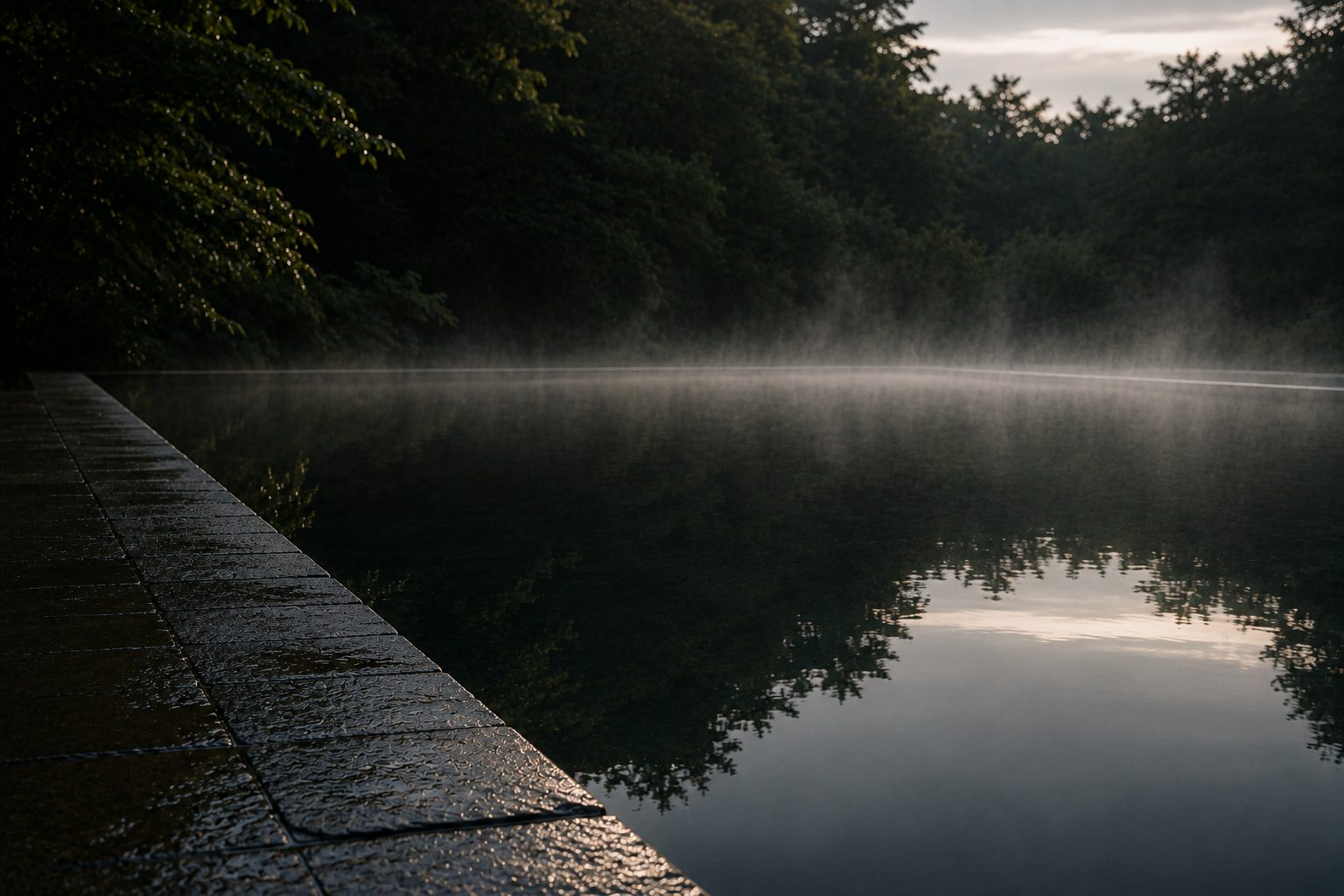
Most people arrive at a wellness resort already depleted. They have flown overnight, cleared a backlog before leaving, and landed with a nervous system running on its reserve tank. And then, very often, they are handed a schedule.
Six treatments. A fitness assessment at eight. A guided hike at six the next morning. An ice bath, because the property has invested in one. It is generous, it is expensive, and it is frequently the wrong sequence. I have watched guests leave a five-day programme more tired than when they came, having done everything asked of them.
That pattern is the reason I built my work around a single principle: transformation begins with release, not with more activity.
For most of the last decade the momentum ran the other way. Wellness became performance — cold plunge, contrast therapy, IV drips, biohacking panels, longevity diagnostics. Intensity was easy to photograph and easy to sell.
The numbers behind that market are not small. The Global Wellness Institute puts the wellness economy at a record $6.8 trillion, growing 7.9% in a single year and forecast to approach $10 trillion by 2029. Within that, spas grew 14.6% and wellness tourism 13.8% year on year. This is now serious infrastructure, not a luxury add-on.
What interests me more is where the same institute says the demand is heading. Its 2026 wellness tourism trends describe travel “shifting from performance-driven wellness toward nervous system regulation” — breathwork, slow movement, sound, nature immersion, practices intended to move the body out of a sustained fight-or-flight state. Another trend is named simply Deep Rest, describing travellers who are, in plain terms, looking for sleep.
I have been designing programmes around that idea for years, and it is a strange feeling to see it written down as a market forecast. But it confirms something I would argue regardless of the data: a depleted system does not respond to stimulus the way a resourced one does.
There is a difference between a stressor that a rested body adapts to and the same stressor applied to a body with no reserve. The first can build capacity. The second is simply more load.
This is not an argument against cold exposure or intensive training. I use demanding interventions, and they work. It is an argument about sequence. Ask a guest who has slept five hours a night for a month to begin with a shock protocol and you are not challenging the system, you are taxing it further. Clients often find that the same intervention, offered on day four rather than day one, lands entirely differently.
Sixteen years of watching this play out — at Fusion Maia in Da Nang, at Six Senses Ninh Van Bay, on Viking’s ocean ships, at Cheval Blanc Randheli and Joali in the Maldives — has made me confident about very little. This is one of the things I am confident about.
My programmes are built on what I call the Forest Model, a five-layer architecture with one governing rule: rest first, depth in the middle, integration last.
The structure matters more than the modality list. A menu of forty treatments is not a programme; it is an inventory. What determines whether a guest leaves changed is the order in which things happen and how much space sits between them.
The opening layer does almost nothing that looks impressive. Downregulation, sleep, breath, unhurried bodywork. It is the layer properties are most tempted to cut, because it photographs poorly and appears to underuse the facility. It is also the layer that makes everything after it work.
Depth belongs in the middle, once the system has something to work with. Integration belongs at the end, and it is the most frequently omitted stage in the industry — the guest goes home with a good memory and no method.
If you come to me exhausted, the first session will probably be less than you expect and more than you are used to. We will not begin by adding protocols. We will begin by working out what your system is currently spending its energy on, and removing some of it.
Most people describe a version of the same thing: they can no longer switch off, sleep has stopped restoring them, and the tiredness no longer responds to a weekend. That is not a diagnosis, and none of what I do is a substitute for medical care. But it is a pattern, and it responds far better to sequence than to intensity.
The first change is usually quieter than people hope for. It also tends to last longer.
For operators, the case is commercial as much as clinical.
A spa full of high-intensity interventions can look busy and still underperform its real estate. Revenue per treatment hour, not treatment count, is the number that matters, and a well-sequenced programme moves it — because guests book courses rather than single treatments, complete what they start, and return.
At Six Senses Ninh Van Bay, the Integrated Wellness Programme I launched grew spa revenue 20% year on year. That did not come from adding equipment. It came from structuring what was already there so guests progressed through it in an order that made sense, and from training a team to hold that structure.
The mistake I see most often in a spa audit is a menu that has grown by accretion — every trend of the last five years added, nothing retired, no through-line. The result is a guest choosing at random from forty options, a therapist team stretched across modalities they half-know, and a programme that cannot be described in one sentence. Length is not depth.
Rest is not the absence of treatment. It is the precondition for it. Everything I do professionally follows from that, and the longer I work, the less interested I am in arguing for it and the more interested I am in building it properly.
If you are carrying more than you can put down, book a session and we will start by taking something off, not adding to it.
If you are opening a property, repositioning one, or watching a spa underperform, the consulting and advisory work is where that conversation begins.
Sources: Global Wellness Institute — The Global Wellness Economy Hits a Record $6.8 Trillion; Global Wellness Institute — Wellness Tourism Initiative Trends for 2026